 You’re


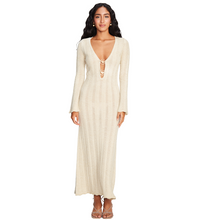
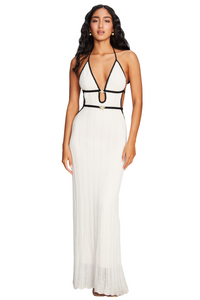


It happens more often than anyone admits. You arrived at the beach with the look you'd imagined at home, put it on with full excitement — and something isn't working. Maybe the bikini and the cover-up don't speak the same language. Maybe the dress that looked perfect in the mirror has lost all its power under direct sunlight with sand as its backdrop. Or maybe something is simply missing and you can't quite identify what.
The good news is that beach rescues are easier than in almost any other setting. The informality of the environment allows for adjustments that would be impossible elsewhere. And almost always, the problem isn't the clothes — it's how they're put together.
These are the 6 most effective fixes for when your beach look just isn't landing. None of them require shopping or changing your entire outfit.
Fix 1: Remove an accessory — excess is the most common problem
When a beach look isn't working, the first instinct is usually to add something. The mistake is almost always the opposite: something needs to go. The beach is the setting where accessories carry the most visual weight because the backdrop is simple — water, sand, light — and anything excessive on the body competes directly with that scenery.

The rule that never fails: no more than three visible accessories at the same time. If you're wearing a hat, earrings, and a necklace, the bag should be simple. If you're wearing a statement necklace, the earrings should disappear. If the bikini or dress already has a gold detail built in — a ring clasp, a brooch, a metal closure — that already counts as an accessory.
Try this: remove one accessory and look at the outfit again. If it looks better, you found the problem. If not, try removing another. Coco Chanel was right seventy years ago and she still is today: the last piece you take off before walking out is usually the one the look didn't need.
Fix 2: Change the hat — it has more power than you think
The hat is the beach accessory that most transforms a complete look. Not because it's the most visible — but because it defines the attitude of everything underneath it. A wide-brim straw hat turns any outfit into something editorial and sophisticated. A fabric bucket hat takes it toward sporty and casual. No hat at all pushes the look closer to minimalist or urban.

If your look isn't working, ask yourself whether the hat you're wearing — or the absence of one — is coherent with the rest. A bikini with gold hardware and a fitted knit dress call for a wide-brim straw hat, not a fabric bucket hat. A casual cover-up or sporty set looks far better without a hat than with one that's too formal.
The simplest fix: if you're wearing a hat and the look feels cluttered, take it off. If you have no hat and the look feels incomplete or too plain, put one on. It's the ten-second change that makes the biggest difference.
Fix 3: Check your color coherence — a look speaks one language or it doesn't speak at all
Color coherence is the hardest problem to identify because there isn't always a color that's objectively wrong — the issue is that the colors you're wearing don't communicate with each other. The bikini in one tone and the cover-up in another that doesn't connect. Accessories in a metal that doesn't link to the details in the garment. A bag in a color that competes with the dress instead of supporting it.
The basic color rule for the beach: no more than three tones in the full look, and one of them must be neutral — white, black, cream, nude, or camel. The most effective looks of the season always follow this balance: one dominant color, one neutral to accompany it, and one metal — gold or natural — to connect both.
Quick fix: if your look has more than three tones competing with each other, remove the most discordant one. It's usually the bag or the accessories. Swap them for something neutral and the rest of the look tends to come back to life on its own.
Fix 4: Restyle the cover-up — there's more than one way to wear it
Many beach looks don't work because the cover-up is being worn incorrectly, not because it's the wrong piece. A crochet dress worn fully closed over a bikini can look overdone. The same dress, open and falling freely off the shoulders like a cape, can become the most elegant element of the look.

Cover-ups can be worn multiple ways, and each one communicates something different: fully on creates a complete beach look; open over the shoulders gives a more effortless, editorial feel; tied at the waist turns the cover-up into an accessory rather than a garment; carried on the arm is the most casual gesture of all.
If your look isn't working with the cover-up on, try wearing it open. If it still doesn't work open, try removing it entirely and only using it when going in and out of the water. Sometimes the problem isn't the piece — it's the insistence on wearing it just one way.
Fix 5: Change the sandal — footwear sets the tone for everything else
At the beach, footwear carries more visual weight than it seems because it's the only part of the look that directly touches the sand — and that connection to the environment makes it more visible than in any other context. The wrong sandal can undermine a look that would otherwise work perfectly.

The most practical rule: the sandal should match the same level of sophistication as the rest of the look. A long dress with gold details calls for a leather sandal with clean straps, not a rubber flip-flop. A casual crochet cover-up and bikini call for a flat artisanal or strappy sandal, not a wedge heel that clashes with the sandy environment.
Fix: if you're wearing flip-flops when the look calls for more, swap them for a flat leather sandal or one with a small detail. If you're wearing something too elaborate for the context, go barefoot — at the beach it's always a valid option and often the most elegant one.
Fix 6: Identify what style you're trying to communicate — and edit out everything that doesn't serve it
Sometimes the problem with a beach look isn't a specific accessory or a particular color — it's a general lack of aesthetic coherence. The look is trying to say several things at once and doesn't land on any of them clearly. A coquette dress with sporty accessories. A boho set with minimalist sandals that don't connect with the artisanal spirit. A quiet luxury look mixed with a bold-print bikini that competes with the restraint of everything else.
The fix is to edit: identify which piece you like most in the look — the one that clearly defines the style — and make sure everything else serves it. If the main piece is a crochet dress in an earth tone, everything else should have a boho spirit: natural accessories, artisanal sandals, a raffia bag. If the main piece is a long dress in a solid neutral, the full look should be clean and contained.
This fix is the deepest of the six because it requires a judgment call, not just an adjustment. But it's also the one that produces the most lasting results: once you're clear on what you want to communicate, you'll never arrive at the beach again with a look that doesn't work.
The perfect beach look doesn't come out of your suitcase — it comes from knowing how to edit it on the spot
No beach look arrives perfect from home. The context — the light, the sand, the heat, the environment — changes how any garment looks the moment you put it on in the real setting. Knowing how to adjust in the moment is exactly what separates the woman who always looks great at the beach from the one who can't figure out why her look isn't working.
These six fixes work because they attack the real problems: accessory overload, the wrong hat, color incoherence, misusing the cover-up, the wrong sandal, and mixed aesthetics. None of them require shopping. All of them require observation and editing.
And if what you need isn't a rescue but a starting point, the guide on which long beach dress to choose based on your style and trip type is the best place to build a look that works from the very first moment.